The Micro Indentation System delivers state-of-the-art depth-sensing capabilities for precise characterization of material mechanical properties, including modulus and hardness. Powered by Industron’s advanced Depth Sensing Nanoindentation technology, the system achieves a maximum force of 500 mN and a maximum displacement of 18 µm, ensuring exceptional accuracy and reliability in every measurement.
Engineered for micro-level precision, the system is ideally suited for the demanding requirements of modern engineering, materials research, and quality assurance. Its versatile design supports a wide range of applications—from depth profiling, partial unload testing, and thin-film analysis to biomechanics, structure–property correlation, and creep or fracture toughness evaluation.
To enhance productivity, the system incorporates an automated multi-point testing method along with microstructural mapping for detailed hardness and modulus assessment. Users can choose between load-control or displacement-control modes, supported by an AI-enabled software suite that streamlines data acquisition, visualization, and analysis.
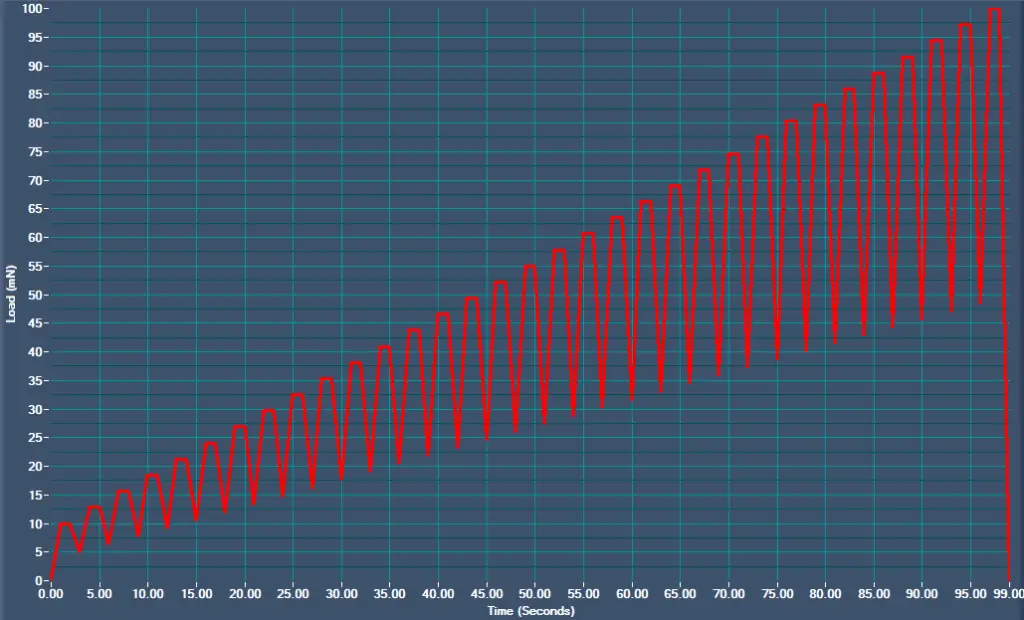
In the partial unload testing method, multiple load–unload cycles are performed at the same location. After each loading segment, the probe is partially unloaded and then reloaded to a higher force, continuing until the maximum load is reached. This technique reveals mechanical properties such as hardness and modulus as a function of depth.
Micro Indentation
Instrumented depth-sensing indentation using a 10×–40× optical microscope can be performed in load or displacement-controlled modes with Berkovich or Vickers probes. Hardness and modulus are determined by the Oliver–Pharr method or by optical measurement of residual indent size.
Method Automation
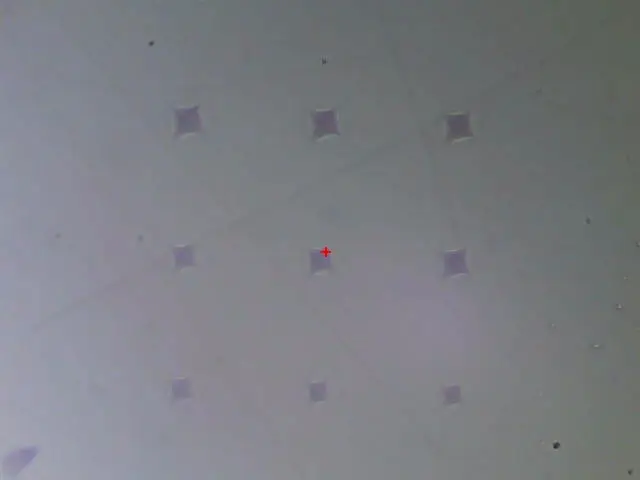
The feature allows the user to run desired number of indents unattended in method automation routine. User can perform automation in the form of a grid or in a line.